Alert-Driven Diagnostics
Signal → reproduction, cause, and minimal fix
In short
Alerts on a live service require manually collecting logs, searching for changes, and reproducing errors, so some signals go uninvestigated.
Outcome
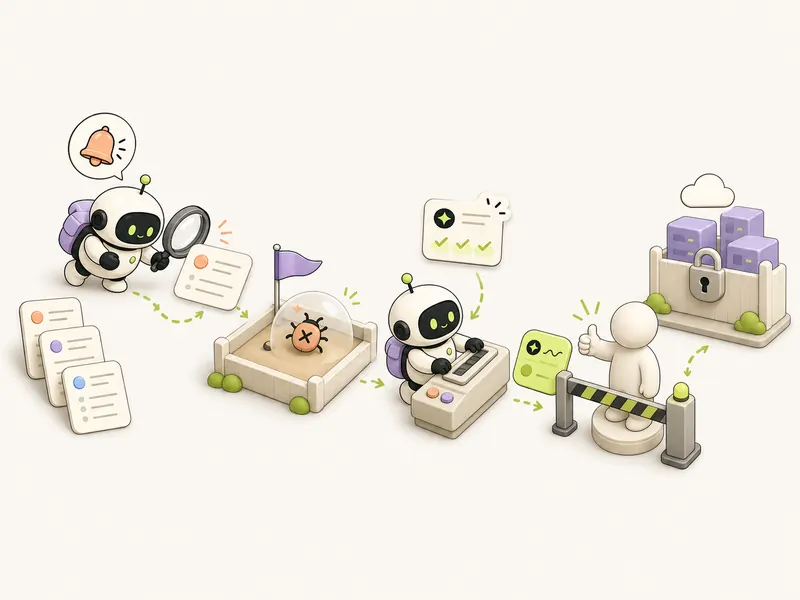
A read-only on-call agent collects evidence, reproduces the problem in a sandbox, and prepares a minimal patch with tests, evidence, and rollback.
How the automation runs
Trigger
Monitoring created a new alert not covered by a known rule
Automation steps
- Classifies risk and stops for billing, auth, or data loss issues
- Collects related logs, metrics, and recent changes in read-only mode
- Reproduces the failure in an isolated sandbox
- Prepares a minimal patch, targeted tests, and evidence package
- Submits the change to a human and observes the metric after approved release
Human check
The agent does not merge or deploy; incidents involving money, access, deletion, or personal data are immediately escalated to a person without attempting to fix.
Outcome
A read-only on-call agent collects evidence, reproduces the problem in a sandbox, and prepares a minimal patch with tests, evidence, and rollback.
Automation diagram
The overall logic is publicUsing it
When to use it
The service already has logs and alerts, but manual triage is too expensive, and it's better to bring a ready diagnosis with a verifiable patch to the owner.
How to verify
For a historical incident, reproduction and root cause are correct, the patch is minimal, the test breaks before the fix and passes after, and there is no automatic merge.
Tools
Recipe details
Open every recipe through @venturehunter
We ask for no phone number, no password and no Telegram login on the site. @penioza_bot checks your subscription inside Telegram and brings you back here with access to every kit, not just this one recipe.
Need help putting this in place?
We will walk through your process and build this loop around your data, your limits and your people.
Message me — I will help